

No products in the cart.


Debora Kolwey
Debora Kolwey - From Dance to Her Own Approach to Pilates
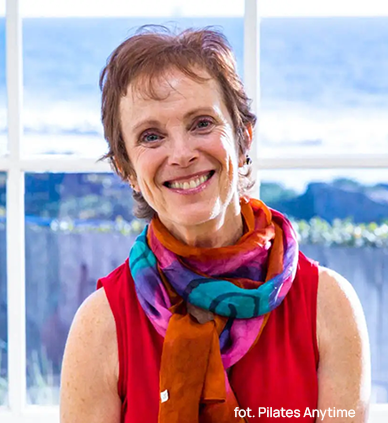
Debora Kolwey’s story shows that the path to becoming an experienced Pilates instructor does not always begin with a clearly defined plan. In her case, yoga, and later dance, could be considered her first movement languages, which remained important reference points for many years. While studying in New York, she attended dance classes daily, unaware that some of the ways of working with the body she was learning were closely connected to what she would later discover in Pilates. In the early 1980s, Debora moved to Boulder, Colorado, after being invited to join a dance company operating there. Since the work of a professional dancer did not provide her with a stable source of income, she began teaching aerobics classes at a fitness club alongside her dance career. It was there, in 1985, that she saw an opportunity for formal training in the Pilates Method. The club owner was a longtime friend of Stephan Frease, owner of “Stephan Studio” in Beverly Hills, California. Debora convinced him to accept her for an apprenticeship; after just one month of intensive training, the first Pilates studio in Boulder was established at the club. However, she quickly realized that learning the basic Reformer exercise repertoire was not enough to truly understand Pilates.
Her Own Studio and the Need for Continuous Learning
Soon, Debora’s professional situation changed significantly. When the club decided to sell some of its Reformers, she asked her mother for help and purchased two units, which she took home. Shortly thereafter, she lost her job at the club. Instead of giving up teaching, she began working with her own clients in a home studio. An important turning point was discovering the book The Pilates Method of Physical and Mental Conditioning. It showed her that the method was far more extensive than she had initially thought. She began to explore its history, mat work, and teachers associated with the New York Pilates community, which naturally led her to further questions and deeper learning. The beginnings were modest, but during this time Pilates gradually ceased to be a side activity alongside dance and began to become the main direction of her professional development. From the very beginning, Debora was also aware that she needed further education. In the fall of 1985, she traveled to New York, where she spent a week at Romana Kryzanowska’s studio. This experience opened another chapter in her education. She began visiting various studios, observing teachers, and learning different approaches to the method.
Meeting Eve Gentry
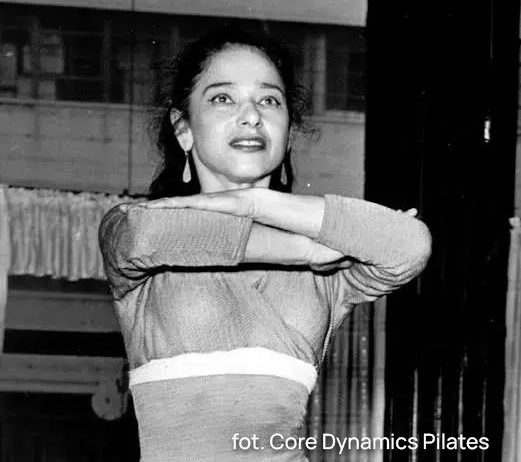
Working with Eve gradually changed the way Debora understood the role of a teacher. It also revolutionized the way Debora approached her own practice. During their sessions together, she observed classes, analyzed individual cases, and constantly asked why Eve chose a particular solution. She also spent many hours working independently and exploring. When Debora began working independently with some of Eve’s clients, she could no longer rely solely on memorized exercise sequences. She had to learn to observe the body, notice the way breath flows through it, and recognize where movement occurs freely and where it is restricted. One of the most important statements she remembered from Eve was: “We don’t teach exercises, we teach concepts.” At first, Debora did not fully understand what this meant, since Pilates is based on a specific repertoire. Over time, however, she began to see that an exercise could be merely a tool for developing something far more important – better breathing, balance, freedom of movement, coordination, or greater body awareness. If a person was unable to perform a specific exercise, the teacher’s role was to find another way to work toward a similar goal. In the face of difficulty, pain, or frustration, their mantra was: “there is always something you can do.”
More Than Exercises - A Way of Thinking
Working with Eve gradually changed the way Debora understood the role of a teacher. It also revolutionized the way Debora approached her own practice. During their sessions together, she observed classes, analyzed individual cases, and constantly asked why Eve chose a particular solution. She also spent many hours working independently and exploring. When Debora began working independently with some of Eve’s clients, she could no longer rely solely on memorized exercise sequences. She had to learn to observe the body, notice the way breath flows through it, and recognize where movement occurs freely and where it is restricted. One of the most important statements she remembered from Eve was: “We don’t teach exercises, we teach concepts.” At first, Debora did not fully understand what this meant, since Pilates is based on a specific repertoire. Over time, however, she began to see that an exercise could be merely a tool for developing something far more important – better breathing, balance, freedom of movement, coordination, or greater body awareness. If a person was unable to perform a specific exercise, the teacher’s role was to find another way to work toward a similar goal. In the face of difficulty, pain, or frustration, their mantra was: “there is always something you can do.”
The Person Is More Important Than the Pattern
This approach particularly strongly influenced the way Debora began working with people experiencing pain or movement limitations. Eve emphasized that pain can often lead to stiffness and protective tension, which in turn restrict freedom of movement. Since it is movement that heals and improves circulation in tissues, instead of directing all attention to one painful area, she looked for movement where it was still available, and then gradually worked to restore a sense of safety and freedom throughout the entire body. For Debora, this became the beginning of an even broader understanding of Pilates. She realized that experiences related to movement can affect not only a person’s physical capabilities, but also their beliefs about their own body. If someone believes that a given movement will always cause pain, the ability to perform that movement in different circumstances, with appropriate support and without discomfort, can challenge that belief. Therefore, her work gradually went beyond simply perfecting technique. It also became about helping people develop greater trust in their own bodies.
Knowledge That Became Personal
Many years later, Eve’s teaching took on an even more personal meaning for Debora. After undergoing a double mastectomy, she found herself in a situation where even simple movements were difficult, and her body needed time to regain its previous capabilities. During her recovery, she returned to the principles she had applied for years in working with others. Instead of forcing her body to perform a movement, she started with breathing, visualization, gentle movement, and acceptance of her current limitations. This experience allowed her to look at her work from a different perspective. Previously, she had supported people who needed a different kind of approach, but now she was experiencing that relationship from the other side. As she recalls, understanding what it is like to lose freedom of movement and gradually regain it deepened her approach to teaching even further.
From Student to Teacher of Future Generations
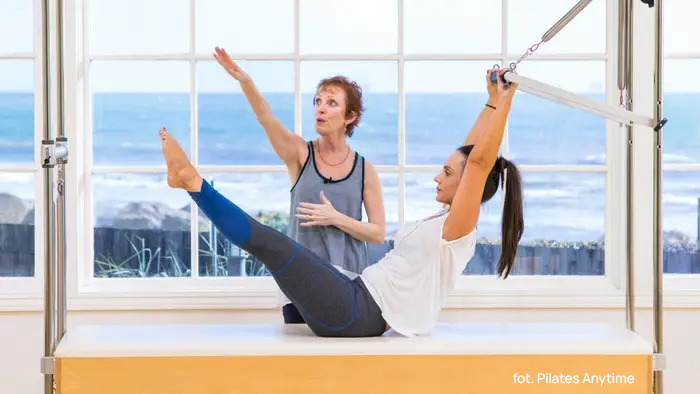
Over time, Pilates became the main area of Debora’s professional life. In 1991, after working independently in various teaching environments, Debora met Amy Alpers and Rachel Segel, sisters who had recently moved to Boulder and opened a Pilates studio where they taught the work of their mentor, Romana Kryzanowska. Debora began collaborating with the sisters in 1991 and the following year completed the full comprehensive Pilates teacher training that Romana had established at The Pilates Center of Boulder. In 1999, she became a Licensed Teacher Trainer and has since taught locally and internationally.
After Eve Gentry’s death, Debora and Michelle Larsson together created the first Core Dynamics workshops to continue teaching Eve’s approach and carry forward her legacy.
Debora attributes her long and rich career to the fortunate moment when she entered the world of Pilates. She had the opportunity to learn from many first-generation teachers and their students at a time when people were far less reserved and eager to share their knowledge and passion with those who were genuinely interested and showed potential to become future teachers.
Perhaps her many years of work are best summarized by the following statement: a good teacher should not only know what exercise to teach, but above all understand why they are choosing it for this particular person at this particular moment. (Another famous saying of Eve Gentry is: “Are you a teacher or a conveyor belt?”). One must possess a good dose of humility, infinite curiosity, and love for this path.
Source: materials and interview with Debora Kolwey published by Pilates Style Magazine